


Learnings from the Retail Technology Show 2026

More articles:
.png)
.png)
.png)
.png)







What we Learned at our First Retail Technology Show
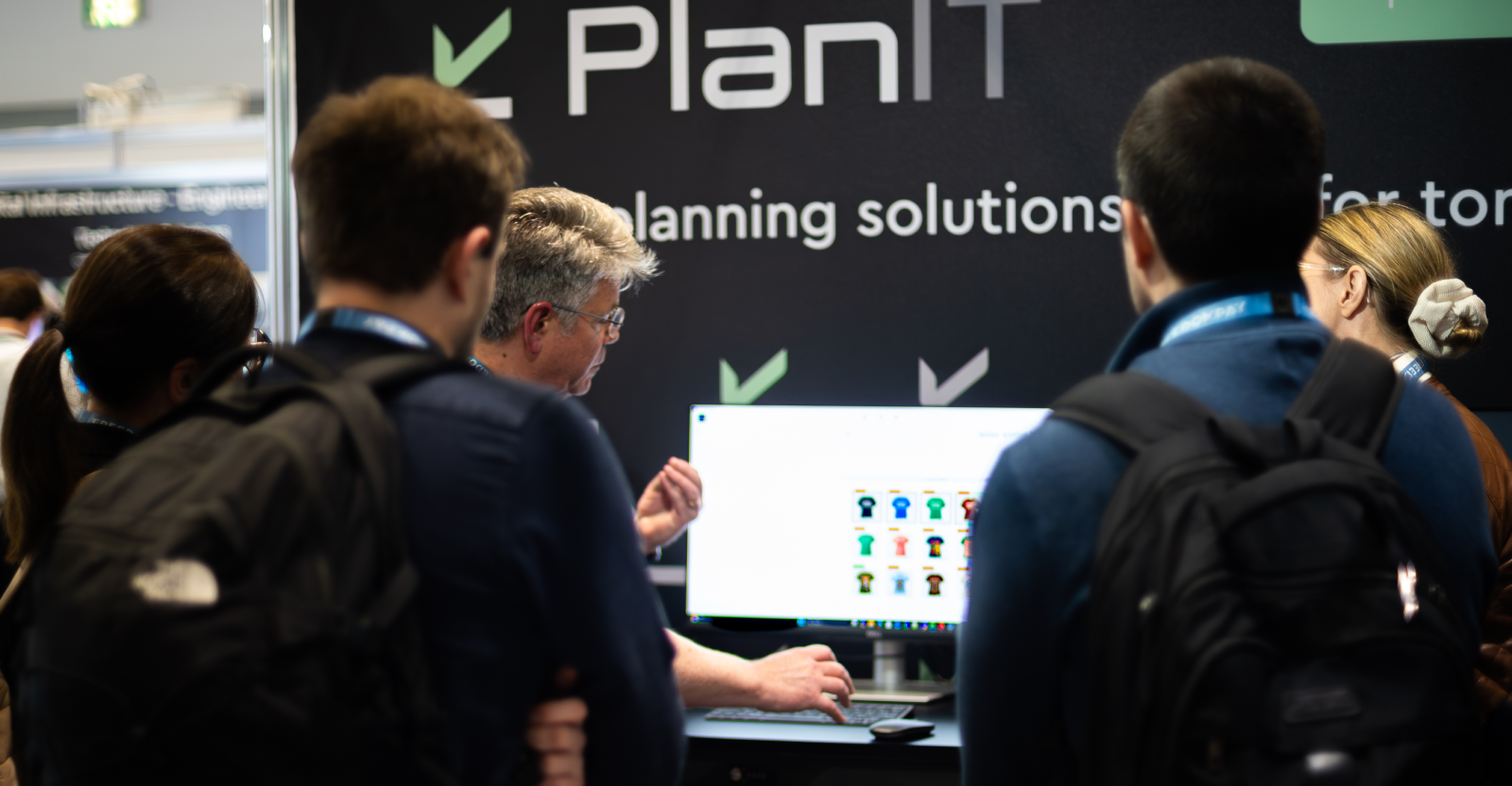
The annual Retail Technology Show (RTS) is always a reliable barometer for the industry's emotional state. This year, walking the floor and speaking directly with dozens of retail leaders, our team at PlanIT noticed a distinct shift in mood. There was an immense volume of discussion surrounding futuristic technologies, automated storefronts, and fully autonomous supply chains. Yet, when we sat down for real, unfiltered conversations with the Commercial and Merchandising Directors accountable for actual trading performance, a different picture emerged.
In the weeks since the doors closed, we have gone away, digested those initial conversations, and conducted a series of productive follow-up meetings with growth-phase brands. The insights gathered from these subsequent sessions have thoroughly informed our views, helping us filter the exhibition floor hype into a practical, reality-tested perspective on what scaling retailers actually need to drive trading performance today.
What these follow-ups confirmed is that the modern retail ecosystem is experiencing a profound disconnect. While the industry discusses theoretical automation, the day-to-day reality on the ground remains tethered to spreadsheet chaos and brittle legacy infrastructures. The fundamental issue is that high-level industry keynotes frequently ignore the operational friction experienced by mid-sized brands scaling past the fifty-million-pound turnover threshold. At this level, structural data management challenges require practical software engineering rather than abstract algorithmic promises.
The Reality of the Retail Floor: Visibility Over Automated Hype
For all the industry talk of total digital transformation, an astonishing number of mid-sized retailers are still navigating critical planning operations via manual workarounds. Two recurring vulnerabilities dominated our conversations at RTS: a systemic lack of forward data visibility and the operational friction of manual processes. Many commercial and merchandising directors shared a familiar frustration:
"I am ultimately accountable for our stock and margin performance, yet I can’t clearly see or control what is actually happening across our lines week-by-week."
When core trading data is siloed across historic reporting tools and fragmented spreadsheets, planning teams are left in a permanently reactive posture. They are not looking at what is going to happen; they are diagnosing what has already gone wrong. By the time a stock bottleneck or a major availability gap shows up in a spreadsheet, the financial damage is done. Markdowns have already been triggered, or sales opportunities have been lost completely.
The common thread among buyers at the show was not a desire for shinier tech: it was a desperate need for a clear, forward-looking view of sales, stock, and intake. They wanted to eliminate admin and focus on decisions that actually move revenue.
This visibility deficit persists doesn't come from a lack of data; with a plethora of BI tools available to assist with weekly sales and margin reporting, analysing what has already happened is the easy part. The real operational bottleneck occurs when planners want to turn raw history into actionable forward plans. This is where the process fractures, relying on the trading experience and technical know-how of a few key individuals to bridge the gap between historical data and actionable outputs.
Cleaning, mapping and validating data to input into forecast models eats up hours of a merchandiser’s day, leaving less time for actual forecasting. The team is consistently forced to make multi-thousand-pound procurement and clearance decisions based on sluggish, static models rather than real-time demand, and business leaders lack a comprehensive view of their teams’ real forecasts.
Pragmatic AI: Support, Don’t Supplant
Artificial Intelligence was, predictably, the phrase on everyone’s lips at the event. However, the appetite for AI among actual retail practitioners is far more pragmatic than the marketing headlines suggest. Retailers are keen to embrace automated intelligence, but they want it focused on two specific execution areas:
1. Automating heavy administrative burdens: Stripping out the menial, repetitive data maintenance that consumes hours of a planner's week.
2. Guiding human decision-making: Providing intelligent, forward-looking recommendations rather than being left to execute autonomously and unchecked.
Effective retail planning requires seasoned commercial judgement and confidence in one's own trading expertise. The teams we spoke with do not want an algorithmic black box making unmonitored purchasing decisions. They want predictive technology that handles the heavy administrative lifting, surfacing early warning signs of over-stock or under-stock risks. This empowers merchandisers to execute defensible, evidence-based interventions before margin erosion occurs. It is about using technology to unlock the value of human expertise, not replacing it.
When an automated platform operates without human-in-the-loop validation, significant financial risks emerge. Retail trends are highly sensitive to non-linear variables such as localised cultural events, micro-influencer trends, unexpected weather shifts, and sudden competitive pricing changes. An unguided algorithm looking purely at raw historical telemetry will often misinterpret a temporary demand spike as a sustained growth signal, automatically triggering substantial purchase order commitments with suppliers. When the temporary demand subsides, the business is left with an overstock crisis, severely tying up working capital and forcing deep markdowns that erode margins and destroy customers’ trust in pricing.
By positioning automated intelligence as a decision-support utility rather than anautonomous decision-maker, the software handles the quantitative burden of scanning thousands of individual SKU combinations, while the human specialist applies necessary qualitative context before any financial budget is allocated.
The Rise of Specialised Coordination Layers
Listening to these struggles has directly validated and sharpened our own product roadmap at PlanIT. The feedback crystallised a massive market appetite for agile, specialised solutions that plug directly into existing setups to bridge the gap between historical data and operational execution. Rather than forcing a disruptive software overhaul, the focus at the show was on how our complementary tools work together to solve specific trading pain points.
While the feedback validated our entire software suite, the event directly highlighted an opportunity to supercharge how these tools interact. Consequently, we are accelerating key functional additions and cross-platform integrations to elevate the collective operational impact of the entire PlanIT platform.
The Line Card Module: Accelerating Procurement Velocity
Historically, our Line Card module was viewed primarily as an exceptionally accurate item-level forecasting tool, guiding planners in making the best use of their OTB. At RTS, however, it emerged as a standout solution because practitioners saw its potential to become a highly proactive demand-planning workspace with a few key enhancements.
To capitalise on this, we are accelerating development in two key areas: In-Tool Purchase Order Amendment and Freight Consolidation. By these key functions directly into the core forecasting grid, teams can optimise commitments before production schedules are locked in, and make ad-hoc adjustments without leaving their core planning view. This completely eliminates order lag and ensures procurement moves at the exact speed of customer demand.
The Visual Assortment Plan: Transforming Initial Intent into Visual Strategy
Our new Visual Assortment Plan generated plenty of excitement on the exhibition floor, particularly among buying and merchandising leads who felt trapped by flat rows of data. Practitioners immediately recognised the value of combining a modern visual ranging tool with enhanced spreadsheet-based volume planning, allowing teams to build, balance, and visualise their collections dynamically and lean into the flexibility of spreadsheets while eliminating their performance limitations.
Instead of reviewing abstract product codes, teams can visually cluster ranges by attributes, delivery windows, and store tiers. By bringing visual clarity to the very start of the planning cycle, it ensures that commercial intent aligns perfectly with buying budgets before a single purchase order is generated; this drastically reduces the risk of over-ranging.
The Centralised WSSI Engine: Driving Institutional Margin Control
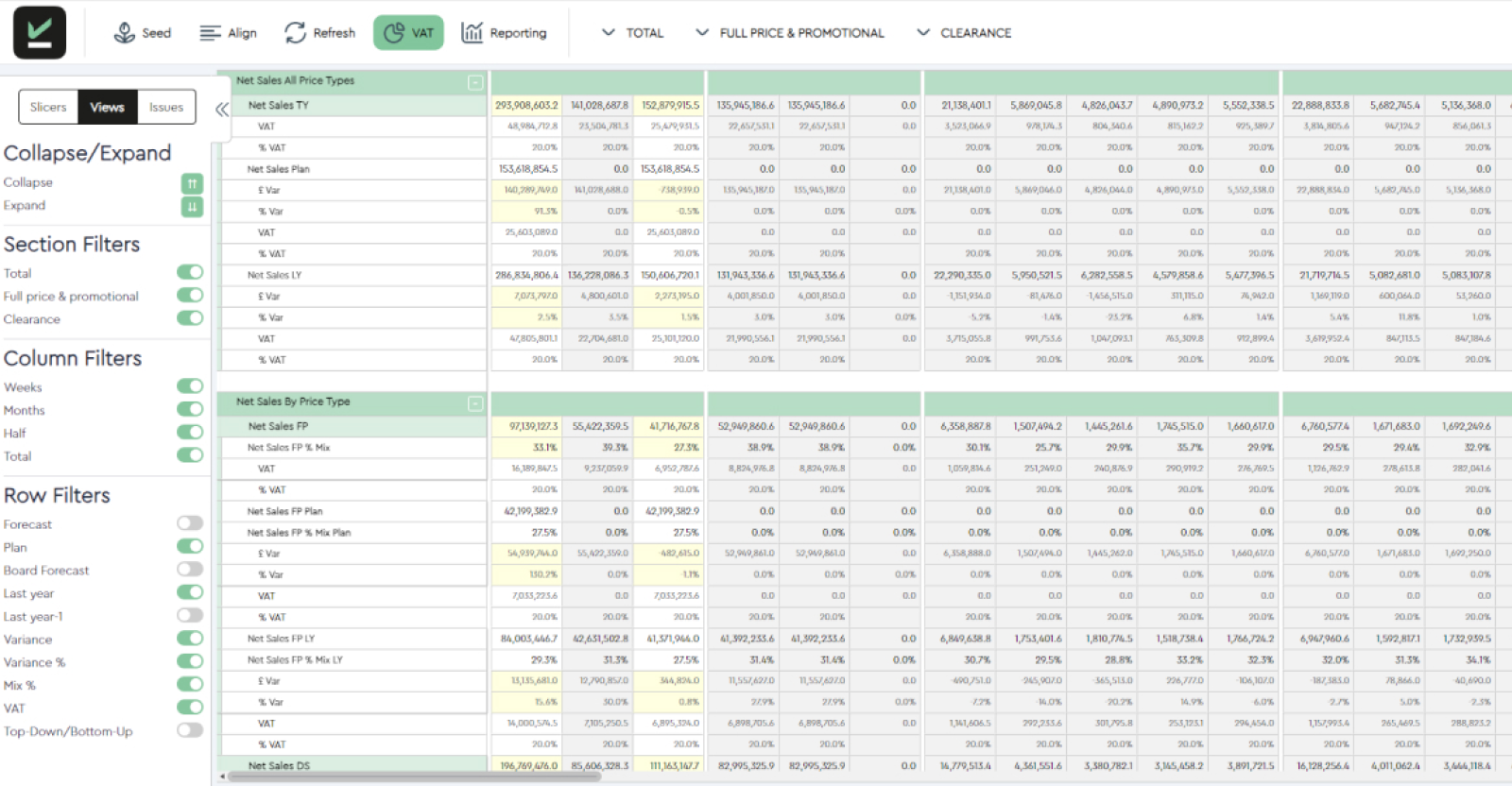
Tying the ecosystem together is our centralised WSSI planning engine, which received strong engagement from finance and merchandising directors looking to escape the visibility gap of their current systems. Scaling brands often struggle to keep their high-level financial plans in sync with daily trading realities; our WSSI engine bridges this exact gap by keeping top-down financial plans and bottom-up trading forecasts in one place.
By tracking sales, stock, and intake data dynamically, the WSSI engine acts as the single version of truth that safeguards gross margins and open-to-buy budgets. It seamlessly complements our item forecasting and assortment planning tools, ensuring that high-level financial guardrails automatically guide item-level procurement decisions.
The Non-Negotiable Criterion
The final, overriding takeaway from our time at RTS was that seamless integration is a complete deal-breaker. For a growing retailer, the prospect of an entirely centralised "rip-and-replace" technology transformation is terrifying. It creates massive operational anxiety and introduces systemic risk to ongoing trading.
Our specialised software architecture ensures that new tools fit seamlessly alongside existing infrastructures, pulling data cleanly from multiple sources without requiring a massive, multi-year IT overhaul. Retailers can instantly unlock clarity, control, and commercial impact exactly where they need it most, without the disruption of a rigid enterprise project. To see how these improvements translate into bottom-line performance, you can use our interactive Benefit Calculator to measure your exact financial return on inventory control.
The contemporary enterprise technology framework must prioritise modular design principles. If a scaling multi-channel business has spent considerable capital optimising its core transactional database, warehouse scanning applications, or financial ledger infrastructure, it should not be forced to discard those working investments simply to acquire accurate demand forecasting capabilities.
Our engineering model relies on secure, automated data synchronisation pipelines that operate non-disruptively in the background. The software acts as an intelligent processing layer, reading underlying transactional histories, running them through specialised forecasting module and delivering optimised range and volume directions directly back to the merchandising teams without altering the existing IT architecture.
Turning RTS Insights into Actionable Strategy
The conversations we held at RTS 2026 proved that while the industry paints a grand vision of autonomous supply chains, the growth-phase brands outperforming the market are the ones fixing their day-to-day data visibility. By cutting out the spreadsheet admin and adopting an agile, modular approach to software architecture, retailers can de-risk modernisation entirely. It is time to leave the theoretical buzzwords on the exhibition floor and focus on giving your merchandising teams the clear, predictive control they need to protect margins and drive sustainable growth today.
Request a demo with our experts to see how specialised inventory control can replace manual workarounds in your business.
Header image credit: Retail Technology Show (Nineteen Group)


Contact Us
If you’d like to request a demo or find out more about the products and services we offer, we’d love to hear from you. Leave your details in the form below and we’ll get back to you.